

An article from Q&A Virginia Tech coalition plans Reddit-like digital commons for builders
Andrew McCoy, interim managing director of the Coalition for Smart Construction at Virginia Tech, says the organization is prioritizing more seats at the table for smaller builders.
Published Sept. 2, 2026

Matthew Thibault Reporter
- Share
- Copy link
- X/Twitter
- License
- Add us on Google
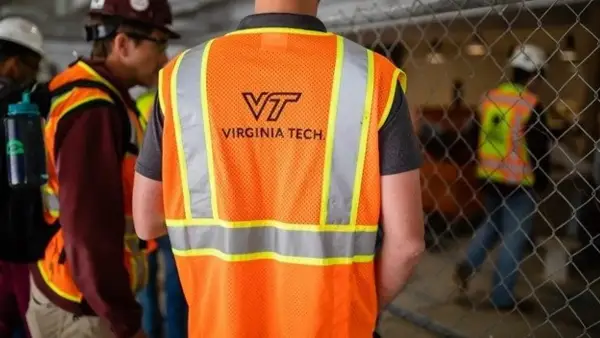
Virginia Tech students tour a construction jobsite. Courtesy of Peter Means/Virginia Tech Listen to the article 4 min This audio is auto-generated. Please let us know if you have feedback.
Technology seems to be creeping into every corner of construction, but not all builders can afford to take the risks that come with new solutions. The Coalition for Smart Construction, a collective based at Virginia Tech, aims to change that calculus.
The coalition’s efforts include $280,000 in grants for five projects, awarded in conjunction with Falls Church, Virginia-based HITT Contracting. Those funds provide an opportunity for construction firms to partner with the school on tech-focused initiatives, according to Andrew McCoy, the coalition’s interim managing director. Funding amounts are allocated on a per-project basis, he said.
One initiative in the works, McCoy said, is a platform that will help builders connect on tech advancements in construction in a digital commons.
Here, McCoy talks with Construction Dive about what the coalition has been working on, future plans and efforts to get a new digital forum off the ground.
Editor’s note: This interview has been edited for brevity and clarity.
CONSTRUCTION DIVE: What’s the coalition focused on at the moment?
ANDREW MCCOY: One of the challenges here is we have an industry that is not used to research and development.
We’ve got to bring the entire sea level up and get people talking about it, break down walls, get research and development as something that’s part of the culture.
To that end, we’re working to create a digital commons for the industry. I would say it’s a little bit like Reddit, where we have membership that allows you access to a portal, and you get to start having conversations. Those conversations are curated by us. We push information out, we try to get people talking, we try to match groups that have similar interests.
Those conversations can become communities. Then we can start funding the research the membership is interested in. That’s an industry-led, membership-research model.
There’s also our physical space, the Smart Construction Lab in West Falls Church, Virginia. It’s under construction now and is going to have a template that allows, hopefully, many different types of research. The thought is, companies can come in and they can work with our faculty to start driving research immediately.
What was the driving force behind the idea for a digital commons for builders?
We started talking about ways that we can access as many different groups as possible. It was not good enough to say, “Only companies that can afford to drop $100,000 to $300,000 into tech should benefit from driving this industry forward.”
We wanted this to be something that would help drive change for as many companies as possible. We have a relationship with Associated Builders and Contractors where we partner with those smaller builders.
We’re going to pilot and test with ABC members at different levels, probably in October. Once we get feedback, we want to have a deployment-ready system by February, with the goal of having it on the market and working sometime around March to April.
The coalition has a grant program for builders. How has that progressed?
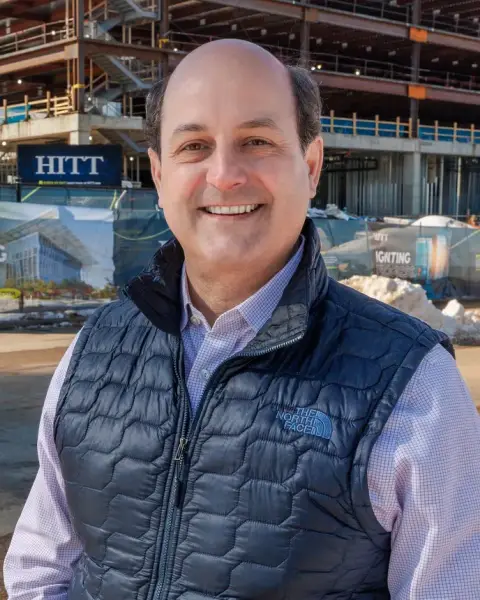
Andrew McCoy Permission granted by Virginia Tech
We have lots of companies that are interested in getting involved in research, but when we talk to them, they don’t know what that looks like. So we’ve been rolling out pilot programs as a way for them to get their feet wet.
The pilot programs are meant to be discovery, not necessarily return on investment right away, but they can lead into larger grants.
That’s where we took $280,000 and deployed that on five projects.
Those have gone very well. They range from prefabricated energy cell solutions for data centers to community-based studies of how data centers can better show how they support the surrounding communities.
Where do you see this program in five years?
My job is to set it up for success.
In five years, I hope the industry needs it, is dependent on it and they’re getting a lot out of it that drives their interest in changing the industry. But I also hope it helps them perform better, have better productivity and of course, lowers costs.
Safety is a huge part of this, and there’s a workforce element to this too. Hopefully, what we’re doing is we’re not replacing, but trying to enhance the workforce with technology.
We’re driving technology that grows what they can do and makes for a better industry.
- Add us on Google
- Share
- Copy link
- X/Twitter
- License
Filed Under: Technology